Introduction: Navigating the Double-Edged Sword of Forex Leverage
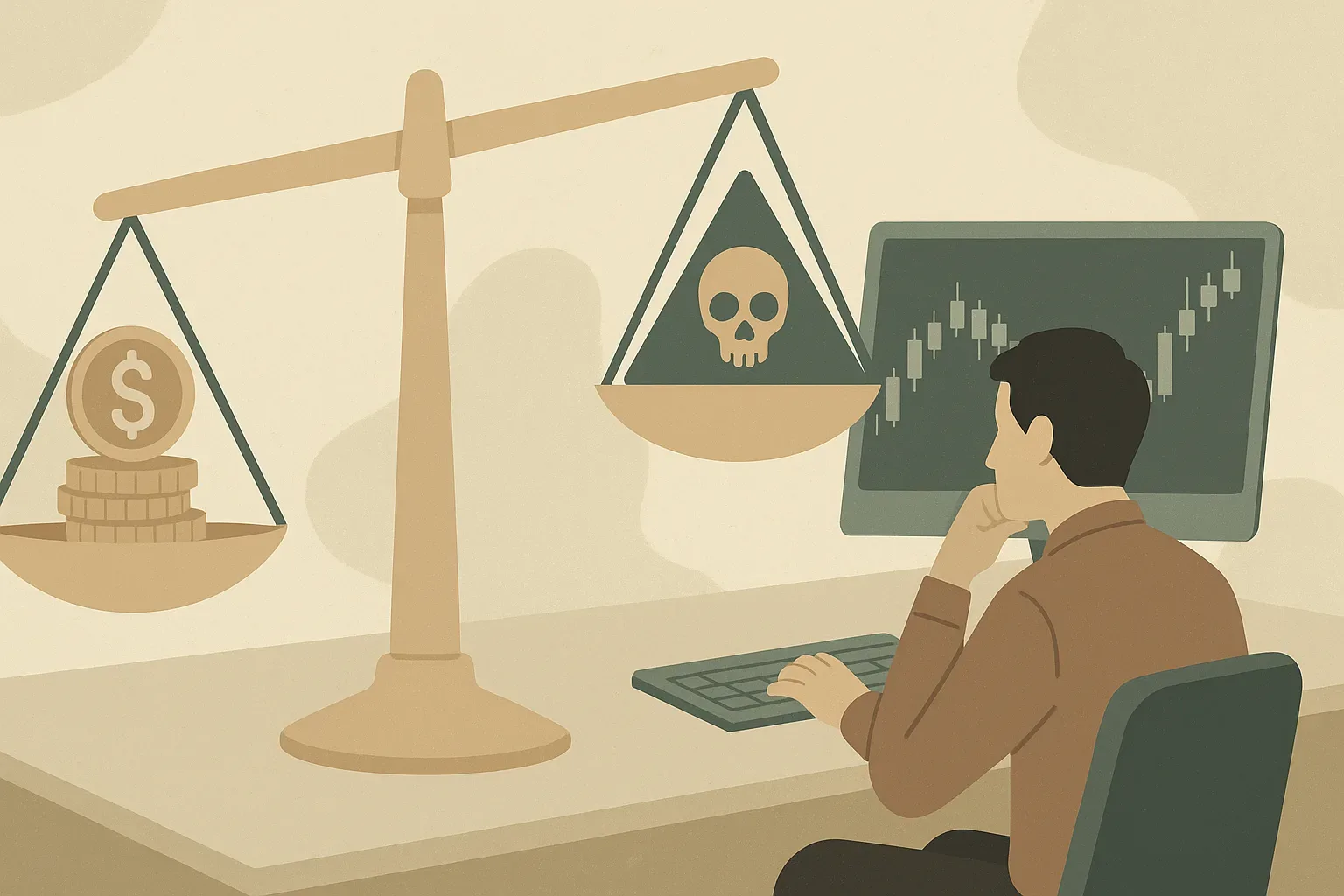
It is a market renowned for its liquidity, volatility, and the significant opportunities it presents to traders worldwide. However, one of the most powerful and often misunderstood tools in a forex trader's arsenal is leverage. Leverage is a facility offered by brokers that allows traders to control a large amount of capital with a relatively small initial investment. While this can dramatically amplify potential profits, it equally magnifies the risks, making it a true double-edged sword.
This guide aims to thoroughly demystify forex leverage, explaining its mechanics, its profound impact on trading outcomes, and crucially, how to wield it responsibly.
It is information, not advice, and leveraged trading can lose your entire balance.
What is Forex Leverage and Why Its Impact Matters
It is expressed as a ratio, such as 1:50, 1:100, or even 1:500. A leverage ratio of 1:100, for example, means that for every $1 of your own capital, you can control $100 worth of currency in the market. Without leverage, traders would need enormous capital to generate meaningful profits from these minor fluctuations.
A small percentage change in the price of a currency pair, which might yield negligible returns on an unleveraged position, can translate into substantial profits or losses when leverage is applied. This amplification effect is why understanding leverage is not optional; it is central to comprehending the risk and reward dynamics of every single trade in the forex market.
What exactly is forex leverage and how does it fundamentally alter trade outcomes?
Forex leverage is a facility provided by brokers that allows traders to control a larger market position with a smaller amount of their own capital.
The Dual Effect: How Leverage Magnifies Both Gains and Losses
Imagine you have a trading account with $1,000. Without leverage, if you bought $1,000 worth of EUR/USD and it moved 1% in your favor, you would gain $10. Now, apply 1:100 leverage. With your $1,000, you can control a $100,000 position.
The exact same 1% unfavorable move on that $100,000 leveraged position would result in a $1,000 loss, wiping out your entire initial capital. Traders must grasp that leverage does not just increase profit potential; it equally, and often more dangerously, increases loss exposure relative to the initial capital invested in a trade.
How does leverage directly influence both potential profit amplification and loss exposure?
Leverage directly influences profit amplification by allowing a trader to enter positions much larger than their account balance. A small favorable price movement on this larger position can result in a significant percentage return on the trader's actual invested capital. For example, with 1:100 leverage, a 0.5% gain on a $100,000 position yields $500 profit, which is a 50% return on an initial $1,000 margin. The underlying currency pair movement might be minimal, but its impact on the leveraged capital is severe.
Leverage, Margin, and Margin Call: Understanding Their Interplay
Margin is the actual amount of your own capital that is set aside by your broker as collateral to open and maintain a leveraged position. It is not a fee, but rather a good-faith deposit. The higher the leverage, the lower the margin required to open a position. For example, with 1:100 leverage, a $100,000 trade requires $1,000 in margin. With 1:500 leverage, the same $100,000 trade would only require $200 in margin.
A margin call occurs when the equity in your trading account falls below a certain percentage of the margin required to keep your open positions afloat.
What is the critical relationship between leverage, margin requirements, and the risk of a margin call?
Leverage directly dictates the margin requirement for a trade: higher leverage means a lower margin percentage required to open a position. For example, 1:100 leverage requires 1% margin, while 1:500 requires 0.2%. The critical relationship is that while lower margin allows for larger positions, it also means there is less buffer for losses before a margin call is triggered. Thus, high leverage, low margin, and substantial open losses significantly increase the risk and frequency of margin calls.
Quantifying Risk: Calculating the True Exposure of Leveraged Trades
Many traders mistakenly focus only on the potential profit of leveraged trades without fully quantifying the associated risk. To effectively manage leveraged positions, you must understand your true exposure. This involves calculating your pip value, understanding the lot size you are trading, and determining the potential loss for each trade relative to your account equity.
A standard lot in forex is 100,000 units of the base currency, a mini lot is 10,000 units, and a micro lot is 1,000 units. The pip value (the value of the smallest price increment) for a standard lot is typically $10 (for USD currency pairs), $1 for a mini lot, and $0.10 for a micro lot. For example, if you trade one standard lot of EUR/USD with 1:100 leverage, you are controlling $100,000 worth of currency with $1,000 margin. If the price moves 50 pips against you, that is a $500 loss (50 pips * $10/pip). This represents 50% of your initial $1,000 margin. If your account equity is only slightly above the margin requirement, a 50-pip move could easily trigger a margin call. Traders must calculate their maximum acceptable loss per trade (e.g., 1-2% of total account equity) and size their positions accordingly, always factoring in their chosen leverage. For further insight into market trends that can influence these calculations, consider reviewing our guide on forex market trends.
How can traders effectively calculate and manage the real risk associated with leveraged positions?
Traders can effectively calculate and manage real risk by first determining their acceptable risk per trade, typically 1-2% of their total trading capital. They then need to calculate the pip value for their chosen currency pair and lot size. For example, a standard lot (100,000 units) typically has a pip value of $10 for USD pairs. Next, they set a stop-loss level, which defines their maximum potential loss in pips. Multiply the stop-loss in pips by the pip value to find the monetary risk per lot. Finally, adjust the lot size so that the total monetary risk does not exceed the predetermined percentage of their account. This approach, combined with understanding margin requirements, ensures that even with leverage, losses are controlled relative to total equity rather than just the margin used.
Strategic Leverage Use: Adapting Ratios to Different Trading Styles and Markets
The "best" leverage ratio is not universal; it depends heavily on a trader's capital, risk tolerance, trading style, and the market conditions. There are specific considerations for different approaches.
For new or conservative traders with smaller capital, it is often recommended to start with lower leverage, such as 1:10 or 1:30. This provides a buffer against rapid account depletion while still allowing them to gain experience. They should focus on micro or mini lots to keep the monetary value of pips small.
Swing traders who hold positions for days or weeks, targeting larger price movements, might use moderate leverage (e.g., 1:50 to 1:100). They typically have wider stop-losses, requiring more capital to withstand market fluctuations, making extremely high leverage too risky for their longer holding periods. Their strategy revolves around capturing trends rather than quick scalps. This strategy might also benefit from careful evaluation of forex signals to align with broader market movements, as discussed in 'Are Forex Signals Profitable?'
Day traders or scalpers, who open and close multiple positions within a single day, aiming for small, frequent profits, might use higher leverage (e.g., 1:200 to 1:500). The rationale here is that their positions are held for very short periods, and they often employ tight stop-losses, limiting the exposure time and potential for large adverse moves. However, this also means they must be highly disciplined, as rapid cumulative losses can occur. For those interested in this specific style, our guide on best scalping forex signals could be a valuable resource.
Adapt your leverage to your strategy, not the other way around.
What are the best practices for choosing an appropriate leverage ratio based on a trader's capital and strategy?
The best practice for choosing leverage is to align it with your risk tolerance, account capital, and trading strategy, always prioritizing capital preservation. Conservative traders or beginners with smaller capital should opt for lower leverage (e.g., 1:10 to 1:30) to minimize the impact of adverse moves. Swing traders, who hold positions longer with wider stop-losses, also benefit from moderate leverage (e.g., 1:50 to 1:100). Day traders or scalpers, who have very tight stop-losses and short holding times, might use higher leverage (e.g., 1:200 to 1:500), but this requires extreme discipline and rapid decision-making.
Essential Risk Management Techniques When Trading with Leverage
Effective risk management is non-negotiable when trading with leverage. Without it, the "double edge" of leverage will invariably lead to significant capital loss. Here are essential techniques:
1. Always Use Stop-Loss Orders: A stop-loss order is an instruction to your broker to close a trade automatically if the price moves against you to a pre-specified level. This is the most fundamental tool for limiting potential losses on any leveraged trade. It defines your maximum risk before you even enter the trade. Ensure your stop-loss is placed at a logical level based on your analysis, not just an arbitrary number.
2. Define Risk Per Trade: Never risk more than a small, fixed percentage of your total trading capital on any single trade, typically 1-2%. Even with high leverage, if you size your position correctly based on your stop-loss and 1% risk rule, your losses will remain manageable.
3. Manage Position Size: Adjust your position size based on your stop-loss distance and your defined risk per trade. If your stop-loss is wide, you must use a smaller lot size to maintain your 1-2% risk. If it is tight, you can use a larger lot size. Leverage should facilitate your desired position size for your risk tolerance, not dictate it.
4. Monitor Margin Levels Closely: Always keep an eye on your used margin and free margin. Ensure you have ample free margin to withstand market fluctuations and avoid margin calls. Overleveraging leads to insufficient free margin and leaves you vulnerable to minor adverse movements.
5. This helps ensure you capture profits from favorable moves, especially in fast-moving, leveraged markets. Understanding how forex signals work can provide insights into setting these levels effectively based on expert analysis.
6. Understand Market Volatility: Higher volatility means prices can move against you more quickly and dramatically. In highly volatile conditions, consider reducing your leverage or position size to mitigate increased risk. Knowledge of forex market trends is essential here.
Common Mistakes Traders Make with Leverage and How to Avoid Them
Despite its potential, leverage is often misused, leading to common and costly mistakes. Avoiding these pitfalls is key to long term trading success.
1. Overleveraging: This is arguably the most common mistake. Traders take on excessively large positions relative to their account equity, believing it will lead to quicker riches. To avoid this, always calculate your risk per trade and position size, never simply using the maximum leverage offered.
2. Ignoring Stop-Losses: Some traders, hoping the market will turn in their favor, forgo stop-loss orders. With leverage, this is a recipe for disaster, as small losses can quickly balloon into catastrophic ones, often leading to a full account wipeout. Always place a stop-loss and stick to it.
3. Lack of a Trading Plan: Entering trades impulsively without a clear strategy for entry, exit, and risk management is amplified by leverage. A well-defined trading plan, including clear rules for leverage use, is essential. This can be enhanced by considering how to integrate forex signals into your strategy, as detailed in our guide on how forex signals work.
4. Chasing Losses: After a losing trade, some traders try to recover their losses by taking larger, more leveraged positions. This often leads to a cycle of increasing losses.
5. Traders might not realize how much free margin they actually have, especially with multiple open positions. Regularly review your margin usage and ensure you maintain sufficient free margin, particularly before major news events.
6. Trading Without a Demo Account First: Beginners often jump into live trading with high leverage without first practicing in a risk-free environment. Using a demo account is invaluable for understanding leverage and its impact without risking real capital. For further advice on starting out, you might find our guide on 'how to choose a forex broker' helpful, especially its advice on demo accounts.
What are the most common pitfalls of mismanaging leverage, and how can they be prevented?
The most common pitfalls of mismanaging leverage include overleveraging, which leads to disproportionately large positions relative to account equity, and failing to use stop-loss orders, allowing small losses to spiral. Another pitfall is ignoring margin levels, which results in unexpected margin calls and forced position closures. These can be prevented by strictly adhering to a defined risk management plan: always risking only a small percentage (e.g., 1-2%) of total capital per trade, using stop-losses on every position, and carefully managing position sizes based on stop-loss distance.
Mastering Leverage: A Foundation for Sustainable Forex Trading
Forex leverage is a powerful instrument that, when understood and used correctly, can significantly enhance a trader's profit potential. However, its immense power comes with an equally significant responsibility. It is not merely a tool for magnification; it is a profound amplifier of both success and failure.
Sustainable forex trading is built upon consistent discipline, thorough analysis, and, crucially, intelligent leverage management. By diligently applying stop-losses, carefully sizing positions, defining your risk per trade, and continually monitoring your margin, you transform leverage from a dangerous gamble into a calculated advantage. Embrace continuous learning, perhaps by exploring topics such as how forex signals vs copy trading can influence your strategy, and always prioritize the preservation of your capital.
Forex, CFDs, and leveraged products carry a substantial risk of loss. It is information, not advice, and leveraged trading can lose your entire balance.
Independent editorial. This site may in future carry advertising or affiliate links; any such relationship is disclosed on the page it affects. None applies to this article.